A quick call-out to those who have already had to “battle” against bugs.
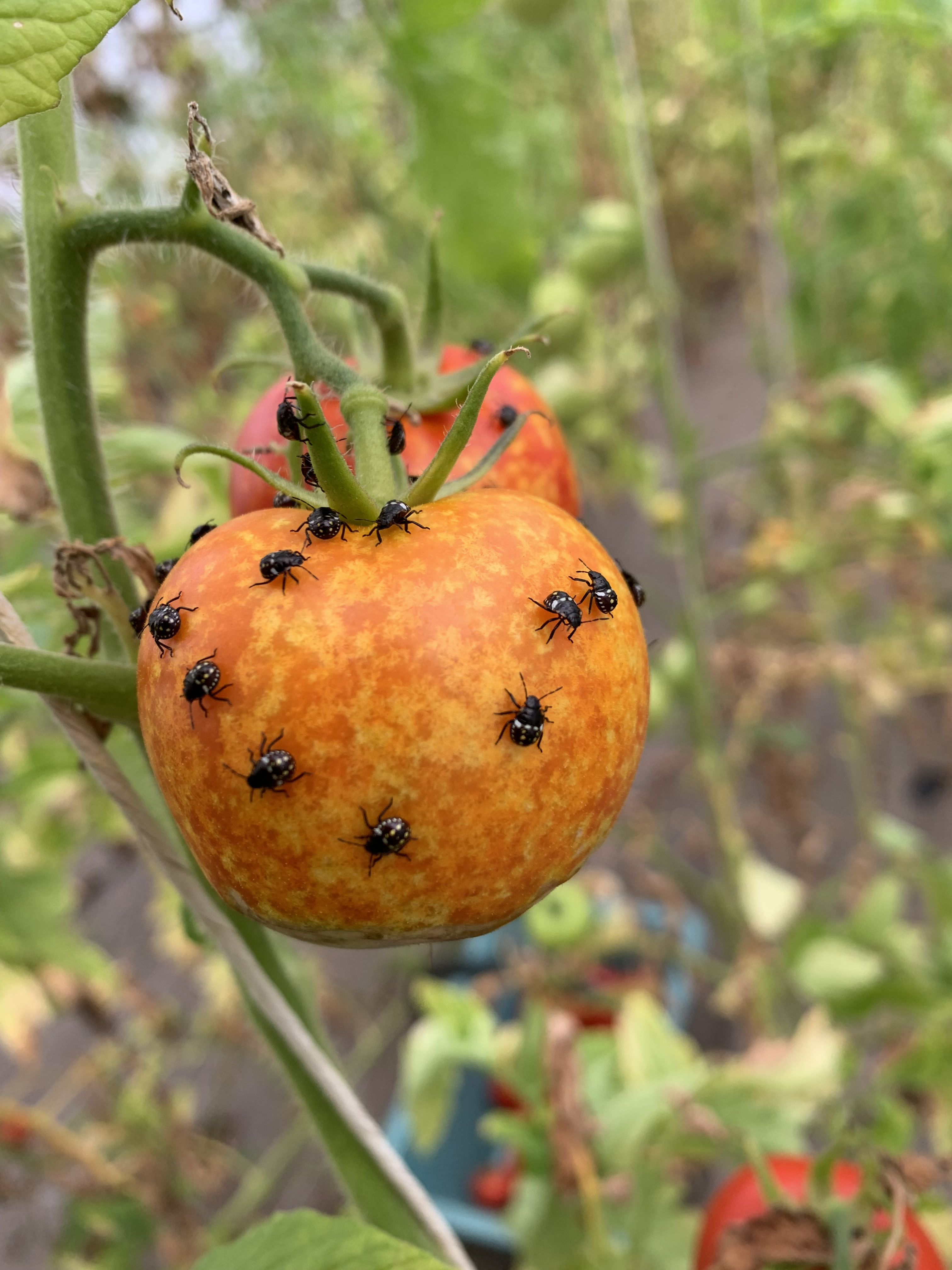
In 2024, my nightshades and especially my tomatoes were the target of a massive attack of green stink bugs (Nezara viridula). I lost the war, particularly on heirloom tomatoes (in August, the sweetest varieties had up to three stink bugs per fruit ready to harvest, and as a result, the fruit was unsellable—pierced, yellowed, …)
My only action was eliminating the clusters of nymphs before they dispersed, but given the scale of the invasion, far too many escaped this “massacre.”
What practices have you put in place that seemed effective to you?
To put it plainly, apart from isolating the greenhouse with insect-proof nets, there is no effective solution known to date. Nezara viridula has become one of the main concerns in vegetable production and the priority issue for experimental platforms.
We are suffering significant damage on:
broad beans (marked seeds)
eggplant (flower loss)
bell pepper and tomato (marked fruit)
cucumber (wilting of the heads, deformed fruit)
green beans (deformed pods)
zucchini (flower loss, deformed fruit)
It is also found on:
new potatoes (wilting of the heads)
basil
spinach
peas (marked seeds)
The approaches we have identified:
vacuuming them up (yes, really)
in autumn, leave crumpled sheets on the ground so they come and shelter inside, then in the middle of winter take the sheets out and unfold them. (not effective, as they shelter in every nook and cranny)
treat with Spinosad at the young larva stage (it is unaffected at the adult stage). Not authorized.
releases of Trissolcus basalis: not sufficiently effective. Expect €100 per release each week
combine the releases with buckwheat sown under the greenhouse: improves egg-laying effectiveness. A lead worth exploring. (CIVAM bio 66)
grow trap plants that are then destroyed. Very strong attraction to tobacco…
I was considering vacuuming the young stages when they are still clustered together, I think I’ll do it in 2025.
My three main tunnels are 6m Debernards, whose sides I lift manually for ventilation; it’s a setup with market-gardening twine, so it’s very complicated to use with insect nets.
At my place too, for 3 years now the green stink bug has been the pest that causes me the most trouble. Last year I tried the Trissolcus micro-wasp; it did have some effect, admittedly, but you’d need to repeat it every 15 days at minimum I think, and given the price that’s impossible…
So, like Meryll and Lucie, this year I’m buying a handheld vacuum just for the stink bugs !!
Hello,
I’ve had the same problem with these bugs for a few years now (and I find it’s getting worse). And as mentioned in previous messages, there’s no miracle solution. I haven’t tried the micro-wasps yet, as the cost seems too high compared to the expected benefit. So I do manual collection. I’ve noticed that they’re particularly attracted to sunflower flowers. So I put a few plants in the greenhouses and around them, and I « visit » them regularly — guaranteed harvest!
Manual collection as soon as I see them, with regular checks from the first attacks and in autumn and winter, I try to hunt out the nests. Especially in my nursery and in the corners of the greenhouses to reduce the population.
Favourite overwintering spots: under and between the stacked crates, and in waterproof clothing.
Very heavy attacks on tomatoes in 2023, it was more the cucumbers in 2024, but they are indeed also found on potatoes, broad beans and also green beans (though little damage on the beans).
This winter is a bit colder with more frost, so I hope that will reduce the population.
Hello, personally this year I had the Brussels sprouts (without netting) next to the tomatoes. My sprouts were infested but not a single one on the tomatoes. Don’t worry, my tomatoes got a visit from the moth!!!
They say Nezara has almost no predators and that’s true, but I’ve found that my chickens pounce on them when I give them some. One solution could be to let them loose for a week in the tunnels that will host sensitive crops, to flush them out. Why not in an established crop, but it depends which one—they could do damage.
 !!
 ) next to the tomatoes. My sprouts were infested but not a single one on the tomatoes. Don’t worry, my tomatoes got a visit from the moth!!!